
Responsible gaming: keep it entertainment
Gambling is paid entertainment with a built-in house edge. Played inside a budget, it is a way to spend an evening; played to recover money, it is a way to lose much more. This page collects the rules, the tools and the honest signals — with no offers and no buttons, because that is not what this page is for.
Four rules that keep play under control
Budget before session
Decide the amount you can afford to lose before opening the game — an amount whose loss changes nothing in your week. When it is gone, the session is over.
Time has a limit too
Long sessions erode judgement, and losses made at 3 a.m. rarely look reasonable in the morning. Set an end time along with the budget and respect both.
Never chase losses
Raising stakes to win back what is lost is the mechanism of every gambling spiral. Losses are the price of the entertainment, not a debt the game owes you.
Gambling is not income
The math favours the house on every game, every day. If you need the money, do not play with it; if a win arrives, it is luck — not a strategy that worked.
Warning signs: check yourself honestly
Problem gambling rarely announces itself. It grows through small rationalisations: one deposit outside the budget, one lie about how the evening went, one bill paid late because the money was on the platform. Ask yourself directly: do I play with money set aside for other things? Do I hide amounts or sessions from people close to me? Do I feel the urge to go back "just to get even"? Has someone near me already raised it? One honest "yes" deserves a pause. Several deserve help — and asking for it early is easier than asking late.
The tools: use them before you need them
Deposit limits
A daily, weekly or monthly cap set in the account. It applies at once; raising it takes effect only after a delay — that delay is the protection.
Timeout
A short break — days or weeks — during which the account will not open. Useful when a bad run starts pulling the decisions.
Self-exclusion
The account is blocked for months, years or permanently, promotions included. The strongest tool: use it while it is still your decision.
Getting help from Bolivia
A gambling problem is a health issue, not a character flaw, and it is treatable. In Bolivia it is handled by psychologists and mental health services like other behavioural addictions; mutual-help groups such as Jugadores Anónimos (Gamblers Anonymous) run meetings across Latin America and online in Spanish. If the online step feels easier, self-exclude first, then talk to someone — a professional, a group, or one person you trust. The order matters less than starting.
Gambling Therapy
Free international support service for people with a gambling problem and for their families: online guidance, support groups and materials, available from any country and also in Spanish. gamblingtherapy.org
BetBlocker
Free app that blocks access to tens of thousands of gambling sites on your phone and computer for the period you choose. Once activated, the block cannot be lifted early. betblocker.org
Frequently asked questions
How do I know if my gambling has stopped being entertainment?
The clearest signals: playing with money meant for something else, chasing losses to 'get even', hiding sessions or amounts from people close to you, and feeling restless or irritable when not playing. Any one of them is a reason to pause and take an honest look; several together are a reason to seek help.
What tools do operators offer to limit play?
Serious platforms let you set deposit limits by day, week or month, session time reminders, temporary timeouts and full self-exclusion. They live in the account settings, usually under 'responsible gaming'. Limits apply immediately; loosening them, by design, takes effect only after a waiting period.
What is self-exclusion and how does it work?
It is a request for the operator to block your account for a set period — months or years — or permanently. During that time you cannot log in, deposit or play, and the operator should not send you promotions. It is a strong tool: if the urge to play is winning, use it before the balance decides for you.
Can I win back what I lost?
This is the most dangerous idea in gambling. Every game has a built-in house margin, and every spin or hand is independent: there is no streak to catch and no system that flips the math. Money spent playing is the cost of the entertainment. The moment recovering it becomes the goal, the entertainment is over and the losses accelerate.
Where can I get help from Bolivia?
Gambling problems are treated like other behavioural addictions: psychologists and mental health services in Bolivia handle them, and mutual-help communities such as Jugadores Anónimos (Gamblers Anonymous) hold meetings across Latin America and online in Spanish. Talking to your doctor is a valid first step; so is telling one person you trust.
How do I protect minors from gambling?
All gambling platforms are 18+ only. On shared devices, log out of casino accounts, use the parental controls of the phone or browser, and keep your payment details out of saved autofill. If a minor has access to your verified account, that access is your responsibility.
Guides to understanding and protection
Casino licence in Bolivia: checking AJ claims and evidence
How to check a casino licence claim in Bolivia: identify the company, domain, dates and AJ scope, distinguish documents, and record what remains unverified.
Casino identity documents: privacy and phishing in Bolivia
What to check when a casino asks for ID: recipient, purpose, privacy and phishing signs. Document possible exposure and find official resources in Bolivia.
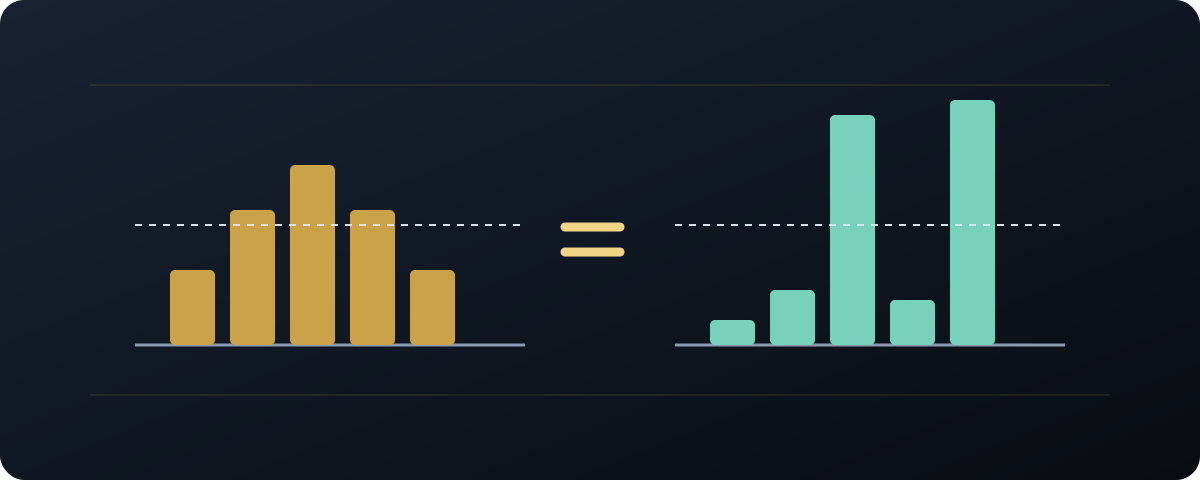
Slots RTP and volatility: what the numbers mean in Bolivia
Understand slots RTP, volatility and payment frequency with boliviano examples. Separate deposits, turnover and balances, and examine misleading promises.
Aviator predictors in Bolivia: signals, videos and false proof
Examine Aviator predictor claims in Bolivia: Telegram signals, edited videos, success rates, APK permissions and evidence to keep after a suspected deception.
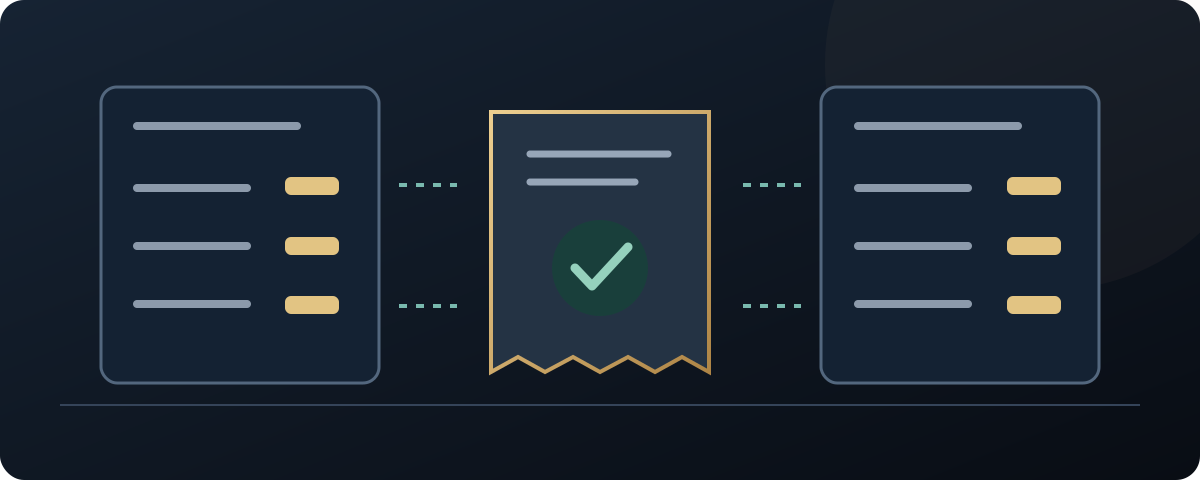
Casino payment disputes in Bolivia: balances and receipts
Organise a casino payment dispute in Bolivia: duplicate charges, missing withdrawals, receipts and the different roles of support, banks, ASFI and the AJ.
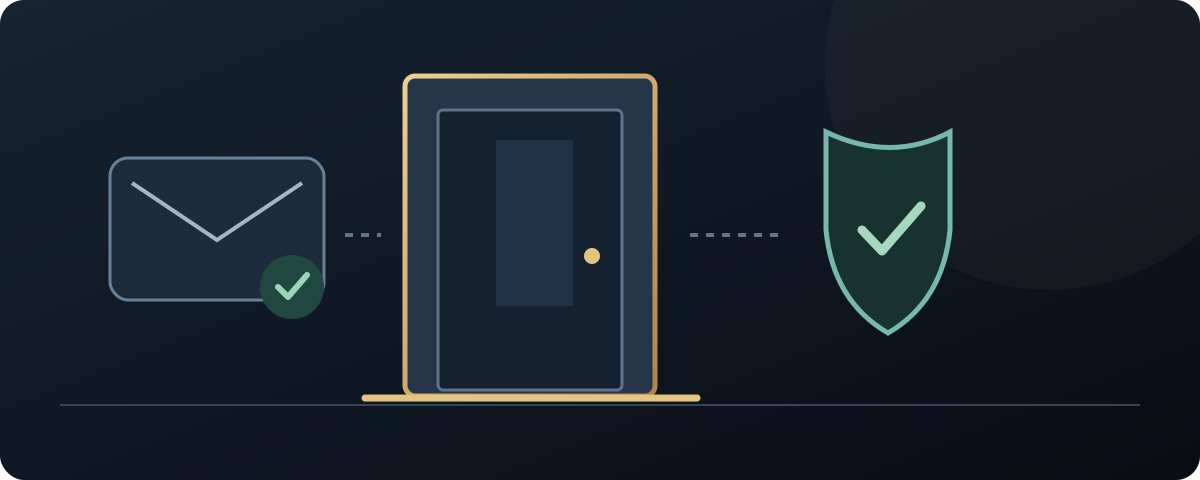
Close a casino account in Bolivia and request self-exclusion
Request casino account closure from Bolivia: self-exclusion, written confirmation, outstanding balances, advertising, device restrictions and support.